

If your home’s plumbing is aging, leaking, or causing frequent headaches, you’re not alone. Many homeowners across the U.S. live in houses built decades ago, when plumbing standards were very different. Over time, old pipes corrode, restrict water flow, and even contaminate your water supply. That’s where whole-house copper repiping comes in.
Simply put, repiping means replacing all the old water pipes in your home with new ones. While the idea may seem overwhelming, the benefits are long-lasting and often life-changing for homeowners tired of dealing with constant plumbing issues. Copper has remained one of the most trusted plumbing materials for generations, thanks to its durability, safety, and performance.
In this guide, we’ll walk you through everything you need to know, from what copper repiping really involves to costs, benefits, timelines, and when it’s time to act. Whether you’re planning or facing urgent plumbing problems, this article is designed to give you clarity, confidence, and practical insight.
Understanding What Whole-House Copper Repiping Really Means
A whole-house copper repipe involves replacing every outdated or damaged water pipe in your home with brand-new copper piping. This includes hot and cold water lines that run through walls, ceilings, and floors. Unlike spot repairs, this is a comprehensive solution designed to eliminate recurring plumbing issues for decades.
Many homes still rely on galvanized steel, polybutylene, or aging copper pipes that have reached the end of their lifespan. Over time, these pipes corrode from the inside, leading to reduced water pressure, discolored water, and frequent leaks. A copper house repipe project addresses all these problems at once, rather than fixing them one by one.
While it’s a larger upfront investment, homeowners often find that a copper plumbing repipe saves money in the long term. Instead of paying for repeated emergency repairs, you invest once and enjoy peace of mind for years to come.
Why Copper Is the Gold Standard for Home Repiping
Copper has been used in plumbing for over 70 years, and for good reason. It’s strong, reliable, and proven to last 50 years or more when installed correctly. When you repipe with copper, you’re choosing a material that withstands pressure, temperature changes, and daily wear.
One significant advantage of full home copper pipes is water quality. Copper doesn’t leach harmful chemicals into your water, unlike some plastic alternatives. It also resists bacterial growth, helping keep your drinking water cleaner and safer.
Additionally, copper pipes are fire-resistant and environmentally friendly. They can be recycled and reused, making them a wise choice for homeowners who care about sustainability and performance.
Signs Your Home Needs Copper Pipe Replacement Now
Knowing when it’s time for copper pipe replacement can help prevent severe water damage. One of the most common signs is frequent leaks. If you’re calling a plumber multiple times a year, that’s a red flag that your system is failing.
Another warning sign is discolored or rusty-looking water. This often means your pipes are corroding internally. Low water pressure throughout the house can also indicate a buildup or narrowing inside old pipes.
You may also hear banging or rattling sounds when using water, or notice fluctuating temperatures in the shower. All of these indicate aging pipes that are no longer functioning correctly. In these cases, a copper water line repipe is often the safest and most reliable solution.
Step-by-Step: What Happens During a Copper Plumbing Repipe
A professional copper plumbing repipe usually starts with a detailed inspection. Plumbers assess your existing system, create a repiping plan, and explain the process clearly before any work begins.
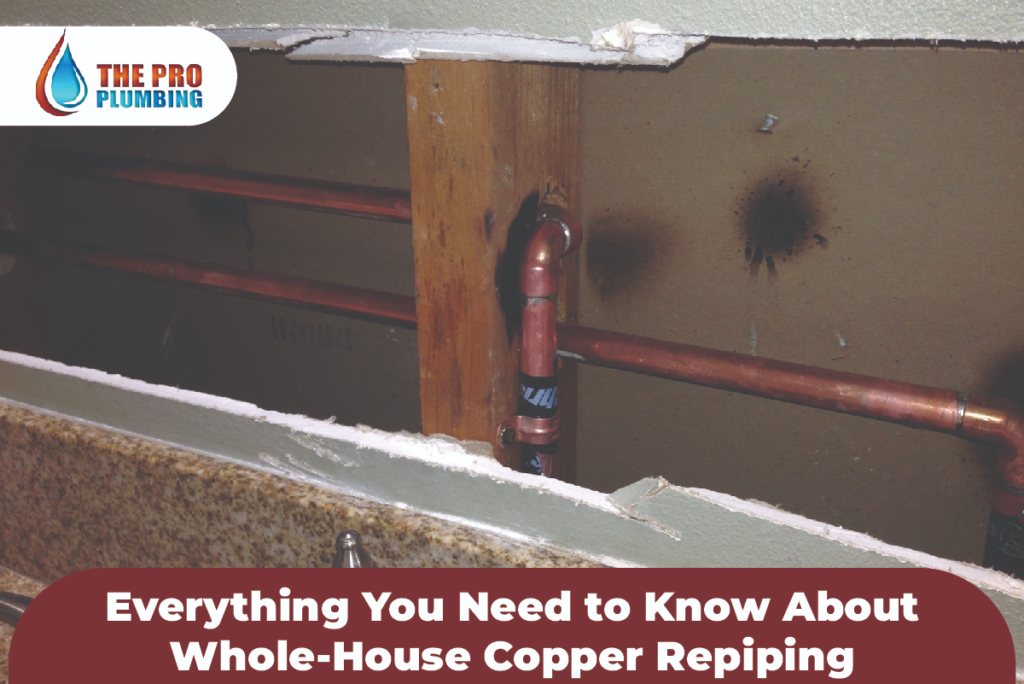
During the project, minor access points are made in walls or ceilings to remove old pipes and install new copper lines. Skilled plumbers work carefully to minimize disruption and protect your home. Water is typically shut off only during active work hours.
Once the whole-house copper repipe is complete, the system is pressure-tested to ensure there are no leaks. Walls are patched, and your plumbing is restored with improved flow, pressure, and reliability. Most homes can be fully repiped in just a few days.
Breaking Down Copper Repiping Cost Without the Confusion
One of the biggest questions homeowners ask is about the cost of copper repiping. While prices vary, several factors influence the final number. These include home size, number of bathrooms, pipe accessibility, and local labor rates.
On average, a copper house repipe costs more up front than partial repairs, but it eliminates ongoing repair expenses. Think of it as a long-term investment rather than a quick fix.
Also, replacing old pipes can increase your home’s value and appeal to buyers. Many homeowners find that the cost balances out when considering fewer repairs, lower risk of water damage, and improved efficiency.
Copper Repiping vs Other Materials: A Clear Comparison
Some homeowners consider alternatives like PEX, but copper remains a top choice. While PEX may be cheaper initially, it doesn’t offer the same lifespan or proven reliability as copper.
A copper repipe provides better resistance to UV light, pests, and extreme temperatures. It also holds up well in both hot and cold climates, making it suitable for long-term use across the U.S.
When comparing performance, safety, and durability, copper pipe replacement consistently stands out as a premium option for homeowners seeking lasting results.
How Copper Repiping Improves Water Pressure and Quality
Old pipes often narrow due to corrosion and mineral buildup. This restricts water flow and lowers pressure. A copper water line repipe restores full pipe diameter, allowing water to move freely again.
Homeowners often notice immediate improvements after repiping. Showers feel stronger, appliances run more efficiently, and water heats faster. Clean copper lines also mean clearer, better-tasting water throughout your home.
If water quality has been a concern, full home copper pipes can make a noticeable difference in daily comfort and safety.
Choosing the Right Professional for Your Copper Repiping Project
Repiping is not a DIY job. Choosing an experienced, licensed plumber is essential for long-term success. Look for professionals who specialize in whole-house copper repipe projects and have strong local reviews.
A trusted company like The Pro Plumbing ensures quality artistry, proper permits, and code-compliant installation. If you’re in California, their dedicated service page for copper repiping installation in Alhambra, CA, is a great resource.
For minor copper pipe issues before committing to a full repipe, you may also find helpful guidance here:
Simple No-Solder Ways to Repair Copper Pipe Leaks
Final Thoughts: Is Whole-House Copper Repiping Worth It?
While a copper plumbing repipe is a significant project, it’s often the most brilliant move for aging homes. It solves recurring issues, improves water quality, boosts home value, and provides decades of reliability.
Instead of dealing with constant leaks and surprise repairs, you gain peace of mind knowing your plumbing system is built to last. For many homeowners, that confidence alone makes the investment worthwhile.
If your pipes are showing signs of failure, now is the perfect time to explore your options and plan.
Frequently Asked Questions
How long does a whole-house copper repipe take?
Most homes can be completed within 2–5 days, depending on size and complexity.
Is copper repiping messy?
Professional plumbers minimize disruption. Small wall openings are repaired after installation.
Does copper increase home value?
Yes. Updated plumbing is a significant selling point and can boost resale value.
How long do copper pipes last?
Properly installed copper pipes can last 50 years or more.
Can I stay in my home during repiping?
In most cases, yes. Water may be shut off temporarily during work hours.
Is copper safe for drinking water?
Absolutely. Copper is one of the safest and most trusted plumbing materials.